UX audits are critical to good product development. They’re designed to single out moments where a user’s experience is impacted by the tool they’re using. While they’re intended to be a balanced and honest report of the state of a site’s experience, they’re sometimes received as more you-done-messed-up-list than to-do list by the people who need to implement changes.
What if the idea that people use UX audits only when things are broken is wrong? What if audits could be used for good; moving from reactive assessments to proactive future-proofing that sets the team up to celebrate quick wins?
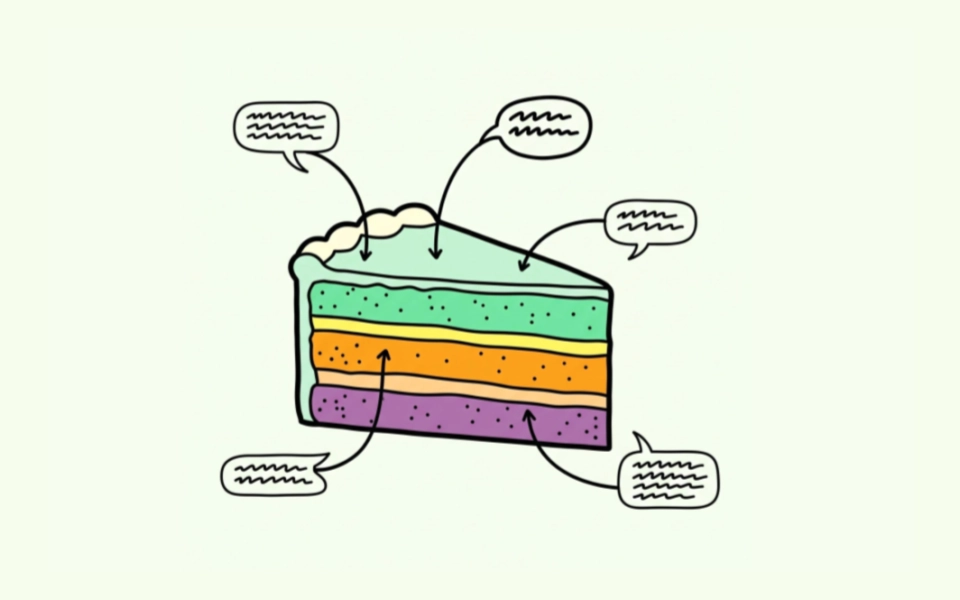
Eat more cake, spill less tea
We think more teams should be doing smaller audits more often. Not only as a hygiene measure, but as a morale mechanism too.
It can be hard working on the continuous development of one product. There are few, “look we did a thing” moments because delivering features and moving onto the next one is the name of the product game. Especially not when it comes to the smaller wins, like aligning micro-copy tones across a whole platform, or forms that finally auto-fill.
Audits can be one such “we did it” moment, and are a good practice for the whole team to do regularly.
Running a quick audit on something bigger than a specific feature can show what has been solved and reward the people who worked hard to solve those issues. Continuous, smaller audits are great to check experiential issues that keep coming up, and adapt solutions sooner rather than later.
Light audits can be done every quarter– but before you freak out, more frequent audits don’t always mean a ton of extra work.
Keep these audits light; think more lemon meringue than black forest
Audits don’t always need to be the whole shebang, and to be frank, these frequent, light audits shouldn’t be. Rather than a usability deep-dive or a QA analysis, think of a more broad sweep of the experience, following full user flows from beginning to end.
Working your way through the product, ask yourself:
- What’s working better this time around?
- What keeps resurfacing (are any of these issues the same as last time)?
- What kind of experience are we becoming known for?
- Is this the experience we’d want if we were our own users?
By following a short list of heuristics, or the ideal journey map, this could be done by anyone in the team, product owners to designers. The goal is not a 60 page report, it’s an acknowledgement of areas that have improved, need improvement, and are somehow still stuck in product purgatory (sequential error message popups; you know what you did).
The point is to shine light on parts of your product you might not have thought about since the last launch, but may be a pivotal moment for your user when combined with other actions they’ve taken in the site. That fix you made to the global search that now takes users seamlessly to the exact product they were looking for with the right info to make the best choice–that’s what we’re talking about.
Once you’ve found stuff, what do you do with it?
Now this next step is important:
WRITE. IT. DOWN.
Bucket your issues into technical bugs (broken links, misaligned modals etc.) and experiential bugs (friction patterns, trust gaps, cognitive overload, inconsistent behaviour across journeys or repeated “small annoyances”).
Instead of all issues ending up in a neverending product-backlog-bug-fix-no-man’s-land, make a place for experiential issues to live. They don’t always qualify as bugs, so feel out of place on a technical backlog. In an ideal world we’d use a searchable repository to find and track insights over time. But as we mentioned in our last article, Our wishes for AI in 2026, we haven’t found a goldilocks tool and the AI-overlords are still a bit behind on delivering.
For now, any spreadsheet will do.
Being able to find and reference recurring bugs (to measure the scale of an issue) and celebrating them when they’re squashed is key to this approach.
And remember, the team needs props. Mark down the less-than-great experiences that have been fixed, and celebrate with the team for knocking those off the list.
But when do you actually need a full audit?
Now by no means are we saying, “don’t ever do a full audit”.
If light audits are hygiene, full audits are an intervention.
When critical numbers drop for less-than obvious reasons, after rapid growth/scaling or before major investment into a product overhaul or strategic shift, it's absolutely worth doing a full heuristic evaluation (let us know if you need help with that by the way → check out our audit and research services).
A full audit is also a great place to start if you feel overwhelmed by this idea of continuous light auditing. Get help to understand your experience, and then get empowered and supported to take care of your product going forward
We tried so hard and got so far, but in the end it really, really mattered.
So there you have it, audits don’t need to feel like a sword hanging over the heads of product people. They could, and should be reframed as recurring tasks that help us notice material improvement in apps and sites. To celebrate the impact of all those hot fixes and to revel in the clarity and aesthetic effect of a design system update.
Like cleaning out the spare room cupboards, UX audits don’t need to be a boat load of effort if they’re done often. And most importantly, they become rituals around which to actively celebrate each other’s work, and to enjoy the sweet taste of success.