
Petal & Post website redesign
Increase conversion and lower customer support. Research-led redesign for a South African flower delivery business with unusually complex constraints
CLIENT
Petal & Post
METHODS
Usability testing
UX audit
Journey mapping
Strategy
UX design
REGION
South Africa
YEARS
2021 – 2025
The brief
Petal & Post is a South African flower delivery service with delivery routes in Cape Town, Durban, and Johannesburg. When they came to us ahead of a planned website redesign, they had a problem their analytics couldn’t explain: Why exactly customers were dropping out of key purchase flows.
The site had real structural complexity underneath its straightforward appearance. Products varied by delivery location. Add-on gifts couldn’t be purchased without a posy. Stock changed throughout the day. The standard e-commerce mental model didn’t fit, and the site wasn’t doing enough to help customers navigate that.
The challenge
Petal & Post’s business model has rules that most e-commerce sites don’t. Because the posies were unique to the location, customers need to specify delivery location before they can see available products but asking for that decision before browsing creates friction. Smaller gifts are only purchasable alongside a posy, but hiding them until that point makes the range feel smaller than it is. Same-day stock availability changes in real time, which was creating dead ends and unexpected errors at checkout.
These aren’t design problems with simple fixes. They’re constraints baked into how the business operates and we don’t want to push these constraints onto the customer. The job was to understand how real customers were experiencing them, then design flows that worked within those constraints rather than against them.
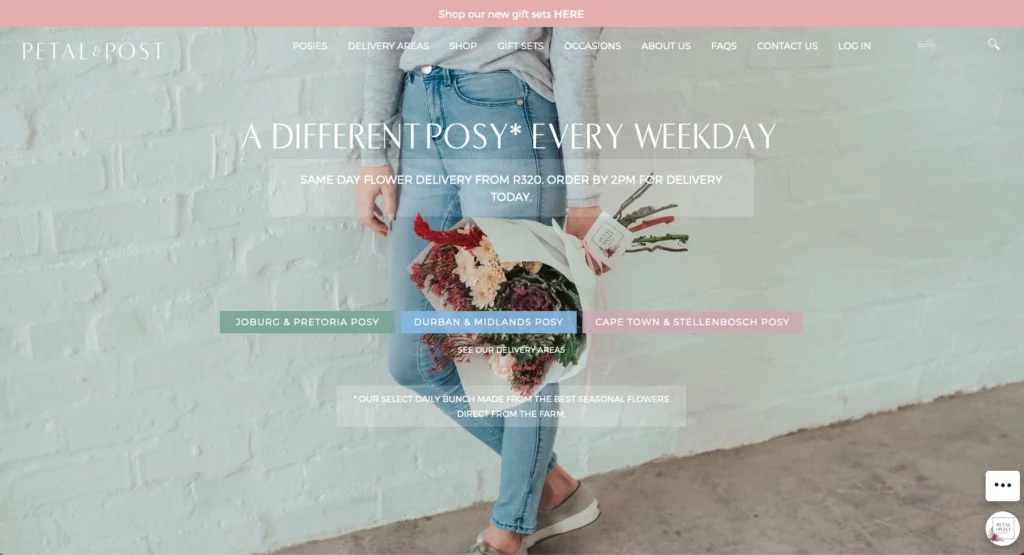
The previous version of the Petal & Post home page
What we did
We worked with the Petal & Post team across three phases over three years.
In early 2021, we ran usability testing with existing and prospective customers, observing how people actually attempted to browse, select, and buy. We also conducted a comprehensive UX audit of the existing site, reviewing it against ecommerce best practice and the specific realities of the Petal & Post model. The findings were clear enough to act on some immediately. The team made a set of targeted improvements to the existing site before any rebuild began, refining product wording, improving menu navigation, and reducing the points where customers were getting confused.
In 2023 we returned for the full redesign phase. This involved customer journey mapping to surface the mismatch between the business’s logic and customers’ mental models, UX wireframes and flow design for the rebuilt site, and a series of collaborative design workshops with the designer, developer, and business stakeholders to pressure-test solutions against real operational constraints.
After that we have been involved in small iterations, updates and new features over time ensuring our UX principles remain intact.
The new site wasn’t built on assumptions, it was built on evidence from years of watching real customers use the existing one.
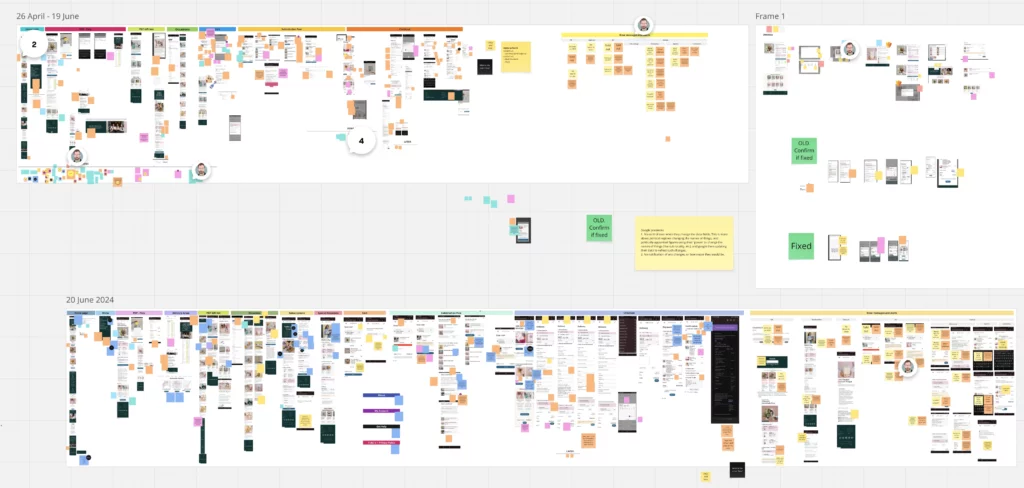
A screenshot of the UX audit planning board
What makes posy delivery UX harder than it looks
LOCATION-SPECIFIC PRODUCTS
The available range changes depending on where the flowers are going. Customers need to enter a delivery location before they can browse, but forcing that decision too early increases drop-off
REAL-TIME STOCK
Availability changes throughout the day based on location, time, and what’s already in a customer’s cart. Without clear feedback, this created unexpected dead ends at checkout.
POSY-FIRST PURCHASE LOGIC
Add-on gifts (extras) can only be bought alongside a posy. Hiding them until a posy is selected reduces perceived range and discoverability.
SAME-DAY DELIVERY COMPLEXITY
Cutoff times and location-based availability mean that what a customer can order depends on when and where they’re deliverying. Communicating this without overwhelming them was one of the central design challenges.
What changed
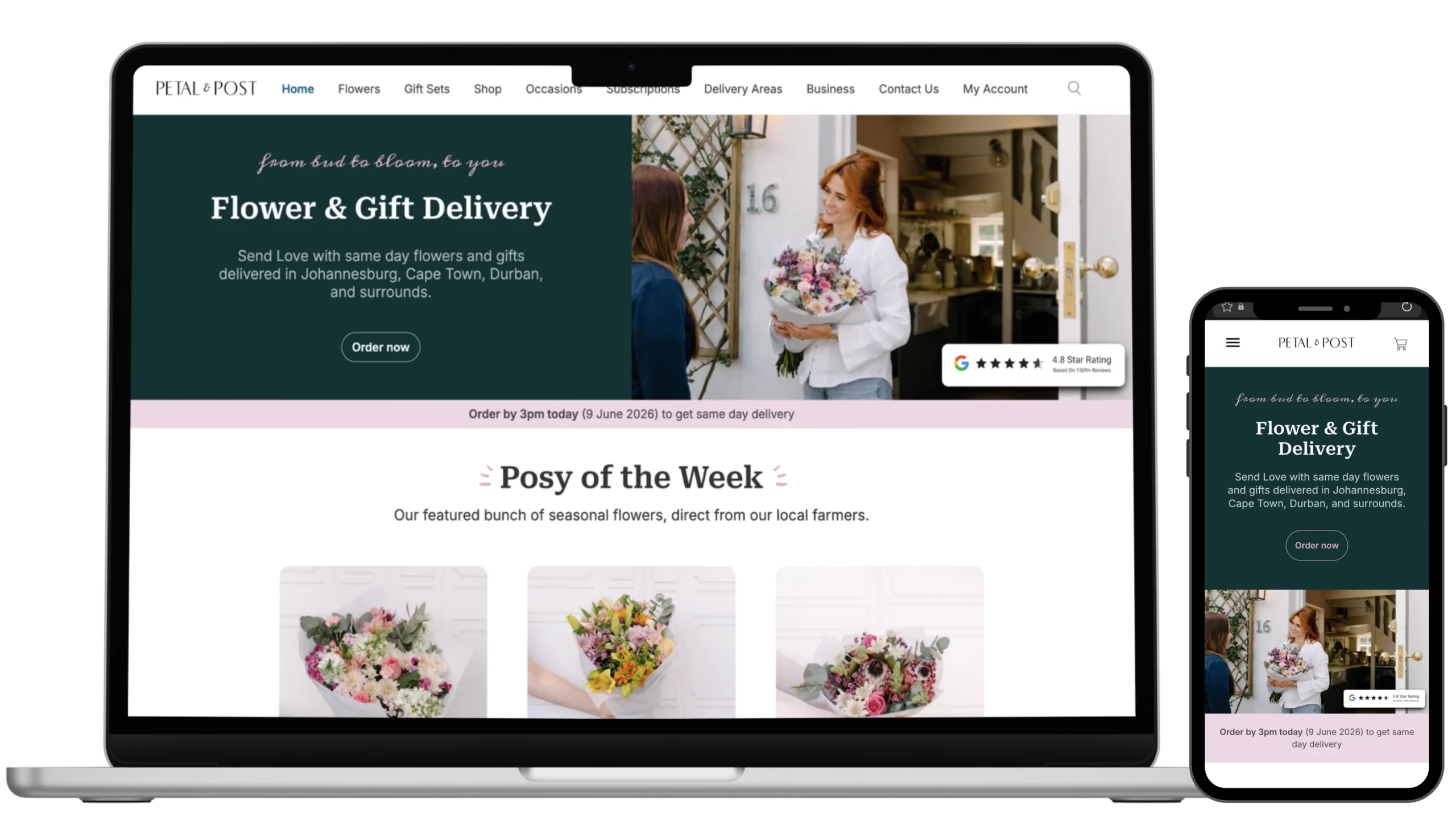
The quick wins from the 2021 research (refined wording and clearer navigation) reduced customer queries almost immediately. The 2023 rebuild compounded that.
After the 2023 rebuild and the subsiqent itterations the weekly order growth increased from around 10 additional orders per week to around 40. The average number of products per order rose from two to three, reflecting stronger product discovery and cross-selling. Customer query volume fell and has remained lower, freeing up internal resources. The new architecture also made it possible to introduce more complex products without adding friction to the purchase flow.
In Petal & Posts’ own words
“With a clear, structured user flow in place, we experienced notable business growth alongside a substantial reduction in customer support comms.”
Jenna Pornoi, Head of web and logisitics, Petal & Post
“Working with How Might We to rebuild our website has been an incredible experience. Thanks to their work, we now have a streamlined, user-friendly checkout process that enhances the customer experience and drives higher conversion rates. Their thoughtful approach has truly elevated our business to a new level of professionalism. We highly recommend them to anyone looking to create a seamless and effective user experience!
Kim Steyn, Owner of Petal and Postt
Need research that informs design, not just validates it?
We work best when research and design are connected from the start